Cover study
The Cellar Door
Drawn and annotated by August Ferry, Illustrator Published 1 September 2026
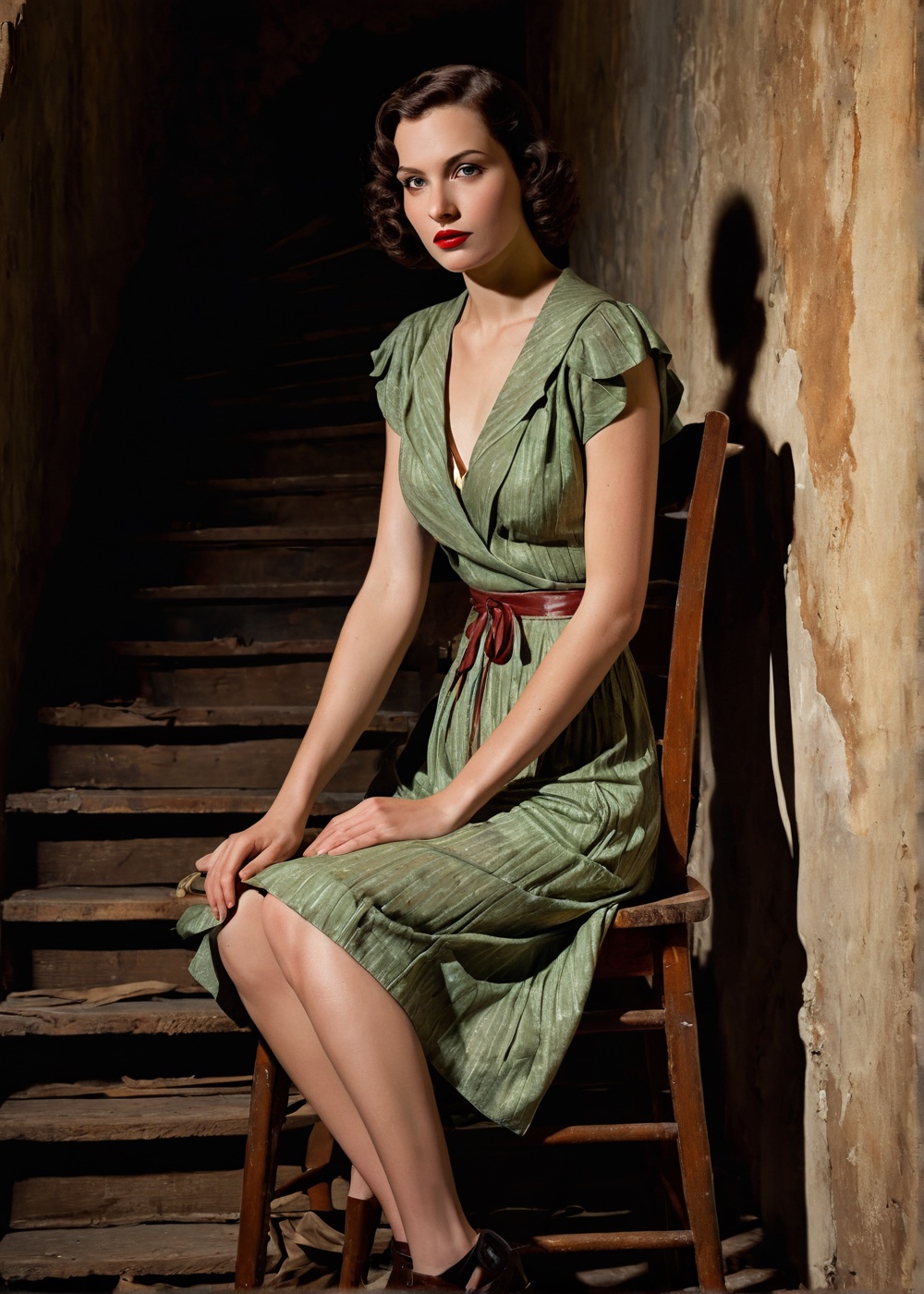
The Cellar Door In the manner of a 1930s pulp magazine cover
One diagonal, one hot colour, and a threat that never gets a face.
- The banister sets the dominant diagonal, and the figure is hung along it rather than placed in front of it.
- The threat is a cast shadow at the top of the steps. No face, no body, nothing for the reader to argue with.
- Four muted values carry the whole plate, so a single saturated red on the lantern glass can own the eye.
- Weight on the balls of the feet and working wrists. Effort in the body is what stops the pose going inert.
- The upper corner is left flat and empty, composed around a price box that would have been printed over it.
This was drawn to be the plainest possible demonstration of the grammar, with nothing clever in it.
A woman in a heavy travelling coat and low heeled shoes is roped to the newel post at the bottom of a cellar stair. She is period dressed and fully covered, which is accurate to the material as well as being the house rule here. She is not slumped. Her weight is on the balls of her feet and her wrists are working, because a figure with no effort in her would kill the picture stone dead.
Everything above her is the threat, and the threat is a shape. A man’s shadow falls across the wall at the top of the steps with a lantern behind it, and no part of him is drawn. That single omission does more for the tension than a rendered villain would, and it removes any need to decide what he looks like.
The colour scheme is four values and one exception. Browns, a dulled green on the coat, near black in the stairwell, and one saturated red on the lantern glass at the top of the frame. The eye enters at the title, drops the diagonal of the banister, finds her, follows her upturned face to the red, and stops.
The corner is empty on purpose, waiting for a price box that would have been printed over it.
The covers on this site are original studies made for it, drawn in the idiom of a period. They are not historical covers, no real publication is being reproduced, and they are attributed to no artist. Where a caption says a study is in the manner of a decade, that describes the look the picture imitates and nothing else.
Pictures record, people decide
Every arrangement in this study was worked out on paper. The real ones get worked out in conversation first.
See where it happens now